
How Stewartville Arrests Work
Stewartville keeps no separate municipal booking system. Its law enforcement flows from the Olmsted County Sheriff's Law Enforcement Center, which lists the city among its contract-law-enforcement communities. Deputies work the contract, and anyone they take into custody gets booked at the Adult Detention Center in Rochester. Two records come out of that. An activity entry logs a call. The ADC roster shows who is actually held. A call and a booking are distinct things, and mixing them up is the fastest way to misread a county record.
The city held 6,687 residents in the 2020 Census source, second among the three Olmsted County cities compared here. Size alone says little about arrest volume. A Stewartville address on an entry does not guarantee an arrest happened either. Let the incident location, arresting agency, and booking data in the official record carry the description. The county contract-policing page lays out this arrangement directly.
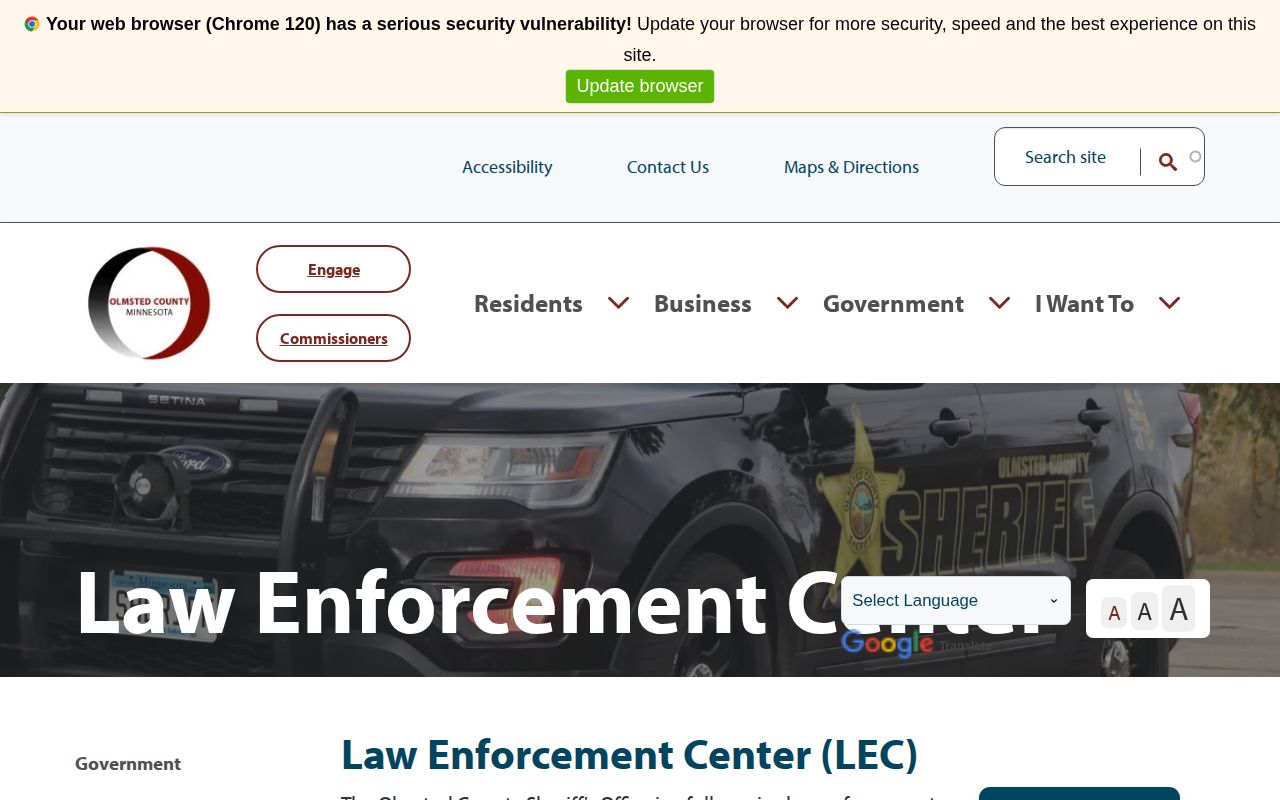
The county page confirms the agency route; no Stewartville city police roster exists alongside it.
Where Stewartville Arrests Appear
Stewartville publishes no city police blotter, booking roster, photo policy, or arrest app. Everything runs county-wide instead. Each county source answers a different question, so a name absent from one view does not mean no arrest occurred.
| Channel | What it shows | Photo | Status |
|---|---|---|---|
| ADC in-custody list | Current detainees, booking time, reason, status, charges | When displayed | Official |
| Sheriff activity log | Date, time, incident, address, city or township, call type | No | Official |
| Sheriff media briefs | Selected notable incidents and arrests | Not a photo feed | Official |
| Olmsted Court Details | Arrest agency, arrest time, judge, charges, arraignment result | No roster photo | Official |
| Arrests.org Olmsted section | Mirrored material that may be empty, delayed, or stale | May show copies | Unofficial |
Go to the official sources first. A third-party county page returned nothing useful even while the ADC system ran fine. Local news picks only certain incidents too. Neither replaces the agency's own jail record.
Find a Stewartville Booking
Search a contract city in steps. Start with custody, then add event and court context. That order keeps a call-log row from getting mislabeled as a booking, and an old roster entry from passing as a same-day arrest.
- Search the ADC list with at least two letters of a first or last name, or browse by the first letter of the surname.
- Compare the full name, booking date and time, photo date, incarceration reason, custody description, charges, and charge levels. The captured roster does not expose a stable booking number.
- Choose the relevant date in the Sheriff activity log and look for Stewartville in the city or township field. Treat its incident number, address, and call type only as event context.
- Review Sheriff media briefs for a notable arrest. Weekday publication means an event from a weekend or holiday may appear later.
- Use Court Details or Minnesota Court Records Online to follow arraignment and disposition. A pending case may not appear through every MCRO name search.
The roster tracks custody, nothing else. Someone released quickly after a Stewartville arrest may vanish from the list, while a person held longer can stay on it past the arrest date. For a one-day view, the Daily Arrest Report covers what the daily log can and cannot show.
Stewartville Arrest Custody Signals
An ADC roster entry can carry a booking photo and its date. It may also list full name, booking date and time, incarceration reason, a physical description, and numbered charges with their levels. Reasons vary. They include new charges, a warrant arrest, probation violation, or sentenced status. Other labels explain ongoing custody. Awaiting bail or bond, awaiting arraignment, release revoked, lodger, and awaiting extradition all appear. Each one describes custody, not an outcome.
- Booking
- The jail intake process after an arrest or other lawful custody event.
- Arraignment
- An early court proceeding where charges and next steps are addressed.
- Bond
- A court-set condition that may permit release while a case is pending.
- Disposition
- The court outcome, which may differ from the charge recorded at booking.
A blank photo does not mean none was taken. Minnesota law treats booking photographs as public data. An image can be held back temporarily when release would harm an active investigation. For county-wide photo and record paths, use Olmsted County booking photos.
Note: The roster updates daily, but the county does not promise instant posting, a photo for every entry, or a permanent release archive.
Request Stewartville Arrest Records
Contract service means records requests go through Olmsted County, not a Stewartville police records desk that does not exist. The shared Rochester/Olmsted Law Enforcement Records unit takes requests through its portal and handles all Sheriff material. A narrow request gets located faster than a demand for everything.
- Name the Olmsted County Sheriff’s Office and identify Stewartville as the incident city or location.
- Provide the person’s full name, the best known date and time, and the incident number when available.
- State the exact item sought, such as the arrest report, booking record, booking photograph, activity record, or release record.
- Select inspection or a copy and ask about electronic delivery. Public inspection is free, while copy or photo costs depend on county policy.
Law Enforcement Center, Police Department Window, second floor
101 SE 4th Street
Rochester, MN 55904-3718
Records: 507-328-6811
Fax: 507-328-6788
The records information page posts the portal and a ten-business-day response expectation, with extra time possible for big requests or heavy workload. The wider county data-practice route lets anyone request records without identification or a stated purpose. Photos can carry an actual cost, and same-day delivery is never promised.
Stewartville Arrest News Limits
Sheriff media briefs lead the news-facing sources for notable OCSO events. A brief may name the location and the agency. It can also cover an arrest or transport to the ADC, plus charges referred to the County Attorney. Routine bookings can be skipped entirely. They run on weekdays except major holidays. Weekend material usually waits for the next publication week before it appears.
Post Bulletin, KROC, KTTC, KAAL, and FOX 9 all cover county incidents. Stories appear when an event drives them. A report might draw on a Sheriff statement. It might also use a complaint, a court document, or an ADC-supplied image. Publication can lag the event by a stretch, and charges can change afterward. News supplies narrative, not a complete Stewartville recent-arrests list.
Note: When a Sheriff brief or news story reports a Stewartville arrest, keep the incident date and publication date separate.
Why County Records Come First
Contract policing shapes how you search. Rochester keeps its own city police report archive. Stewartville offers nothing comparable at the municipal level. Chasing a local arrest feed online can lead you to a lookalike page with no current agency data behind it.
Start at the county instead. The ADC roster answers who is in custody right now, and activity logs give you a date and a location. Media briefs cover selected incidents in more detail. Records staff fill in the gaps, and VINE sends custody-change notices. Courts hold the final outcome. The DOC Public Viewer applies if someone later moves into Minnesota DOC jurisdiction. It never serves as a new Stewartville booking source. Keep these lanes separate. A city arrest, a county jail stay, and a later state sentence should not blur into one record.
Custody and city attribution are two different questions. The ADC roster can show an older booking while detention continues. It can drop a person entirely after release. The daily activity log lists a Stewartville location but no names or photos. Media briefs name people who were arrested, but only selectively. When these sources disagree, ask the records unit for the incident and booking material. Then let the court result close the timeline.