
Olmsted County Weekly Arrest Sources
The county's nearest thing to a multi-day blotter is the Olmsted County Sheriff media briefs page. Briefs go out Monday through Friday. Holidays pause the schedule unless a major incident forces coverage. Each entry zeroes in on notable events, naming the agency, the place, the people involved, the alleged conduct, any arrest or transport, and the charges sent for review.
Editorial selection drives this material. It is not an all-bookings ledger, and routine arrests may never earn a brief. The ADC roster answers who is currently held. The activity log documents calls for a chosen day. Media briefs explain selected events across several days. Keeping those roles straight makes any weekly review stronger. The official media-brief archive displays current entries along with the publication pattern.
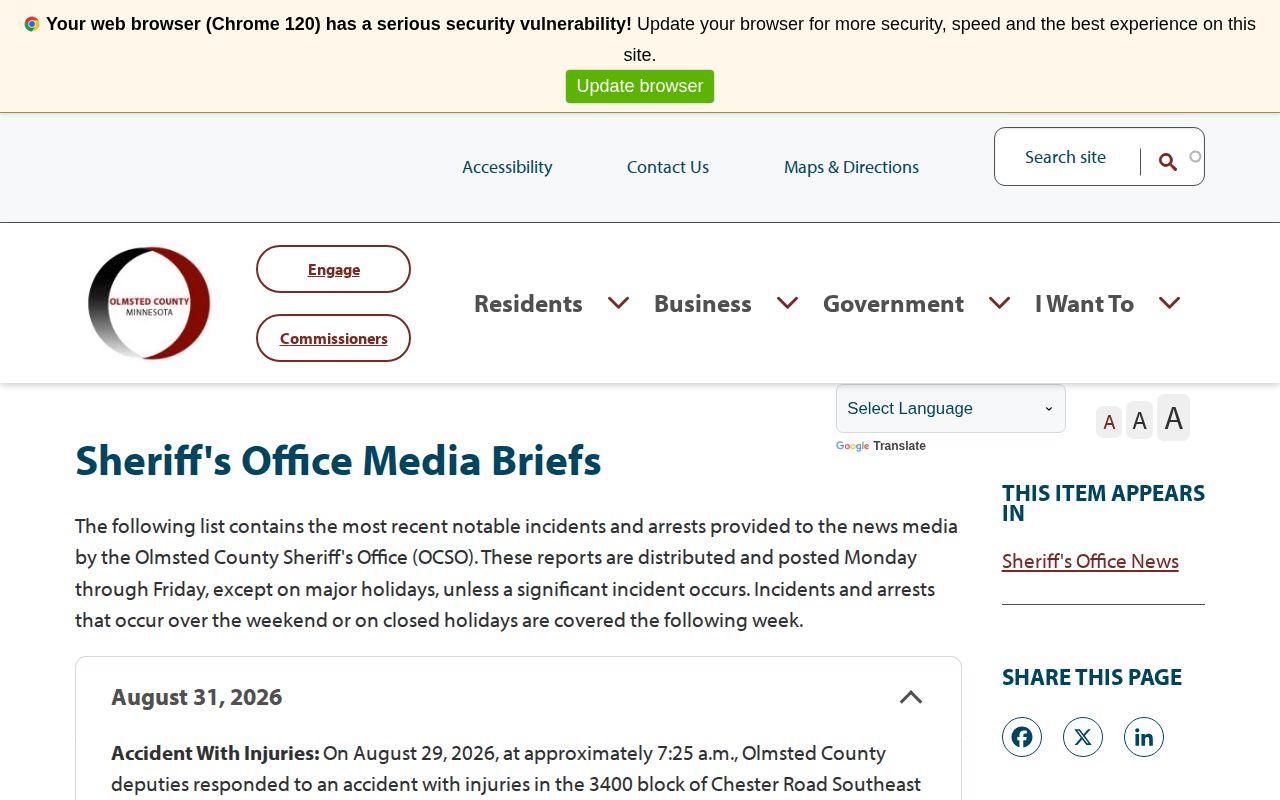
The archive page pairs dated narratives with selected incidents only.
Read the Olmsted Arrest Blotter
Start with official material and work backward. Keep the dates attached to each stage, since a publication date can differ from the incident and booking dates, especially right after a weekend.
- Open the Sheriff media briefs and select the newest relevant date.
- Read the narrative for incident date, location, agency, arrest or transport language, and referred charges.
- Check the ADC current roster if present custody matters. A missing entry may mean release, transfer, delay, or no county custody.
- Use the Olmsted Court Details application for arrest-to-arraignment context and MCRO for later case records.
- Request the source report from Rochester/Olmsted Law Enforcement Records when the published narrative is not enough.
Need today's call activity rather than days of narratives? Use the Daily Arrest Report. The Olmsted arrest records hub covers current custody, booking photographs, warrants, and official request routes.
Olmsted Arrest-Log Entry Fields
A media brief is prose. Fields shift with each incident. The context can run deeper than the activity log offers, though a brief is never a certified court record.
| Possible detail | How to interpret it |
|---|---|
| Incident date and place | When and where the described event occurred. |
| Agency | The office investigating or making the arrest. |
| Name, age, or city | Identifiers included for selected people, subject to legal and policy limits. |
| Arrest and transport | Whether the narrative says a person was arrested or taken to the ADC. |
| Referred charges | Charges sent for prosecutorial review, not convictions. |
| Photo | Not a standard log field. Any supplied image is incident-specific. |
Never fill gaps by guessing. A brief may omit a booking number, exact custody status, or bond. Those details live with the roster, the records custodian, or the court.
Weekend Olmsted Arrest Reports
The weekday cadence creates a roll-forward effect. Weekend incidents generally surface in material issued the following week. Major holidays cause the same lag. A Monday brief may describe a Friday, Saturday, or Sunday arrest, while the ADC booking time reflects the actual intake. Record both dates.
This delay is exactly why the weekly arrest log differs from the same-day call table. The multi-day brief gives narrative and selected-person context. The daily table gives event rows without names. Current custody sits in its own place. None of them archives every person booked.
For urgent weekend events, check the current ADC roster and call the right official line. The ADC number is 507-328-6790. Non-emergency dispatch is 507-328-6800. Published email and web messages are not monitored around the clock; emergencies must go to 911.
Note: publication delay does not show that an agency concealed an arrest or that the event occurred on the publication date.
Rochester Seven-Day Incident Context
Rochester adds a second multi-day source. The Rochester Police Department posts daily incident reports. Its index covers the most recent seven days. These reports give city-police incident context, but they are not county booking rosters, and a listed event does not mean an arrest followed. The RPD seven-day report index shows the available date range.
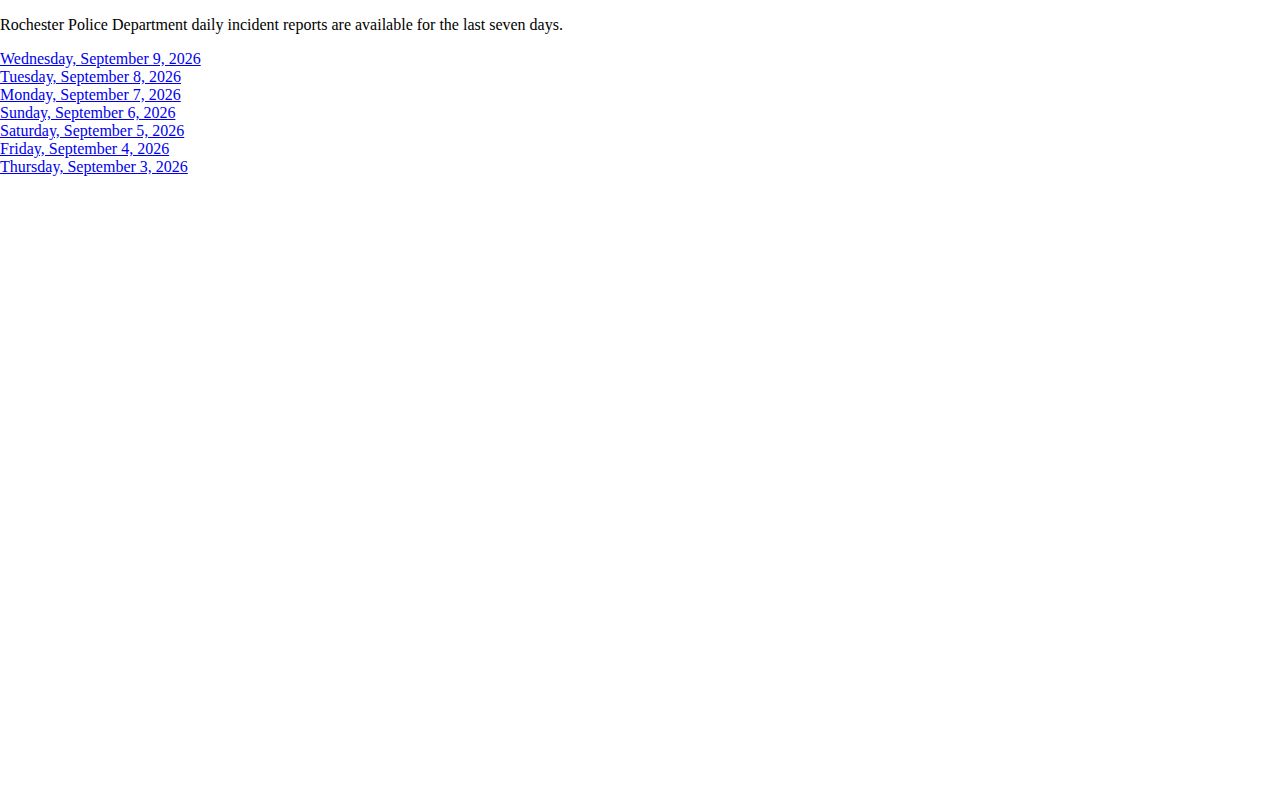
That rolling index complements Sheriff briefs without replacing county custody or court checks. Rochester Police handles city calls. The Olmsted County Adult Detention Center handles county jail custody. Byron and Stewartville take a different route. They contract law enforcement through the Sheriff. This agency map explains the pattern. An event can begin in a city source yet end in a county booking record.
Older Olmsted Arrest Records
The live roster is not an archive. Released people drop off the current list. For anything older, use a focused request. Send it through the Rochester/Olmsted records unit or the county data-practice route. Media briefs keep only selected narratives, and the RPD index rolls forward in a short window. Spell out a name, date, agency, incident number, and the exact item sought. Ask separately for an incident report, booking sheet, booking photograph, release record, or call-log row. Inspecting public county data is free. Ordinary copies may carry stated per-page or actual costs. The law-enforcement records page describes a ten-business-day response expectation with possible extra time.
Rochester/Olmsted Law Enforcement Records101 4th Street SE
Rochester, MN 55904-3718
Phone: 507-328-6811
Fax: 507-328-6788
Older still is genuine jail history. The Minnesota Historical Society finding aid catalogs Olmsted County Sheriff jail registers from 1882 through 1987, with gaps, held as a paper archival collection open for research. The Sheriff says jail records date to 1858. The finding aid is one documented route, not the whole historic universe.
News and Olmsted Arrest Coverage
For Olmsted County arrest details, the Sheriff's own briefs come first. Newsrooms pick and choose. The Rochester Post Bulletin, KTTC, KAAL-TV, and the FOX 9 Olmsted County tag tend to chase bigger incidents. They often skip routine bookings. Reporters also add court updates that a jail roster never shows. Timing runs late, though, since a story often lands well after the booking itself. The Post Bulletin's local-news section gives a fair sample. It shows how Rochester-area crime coverage looks in practice.
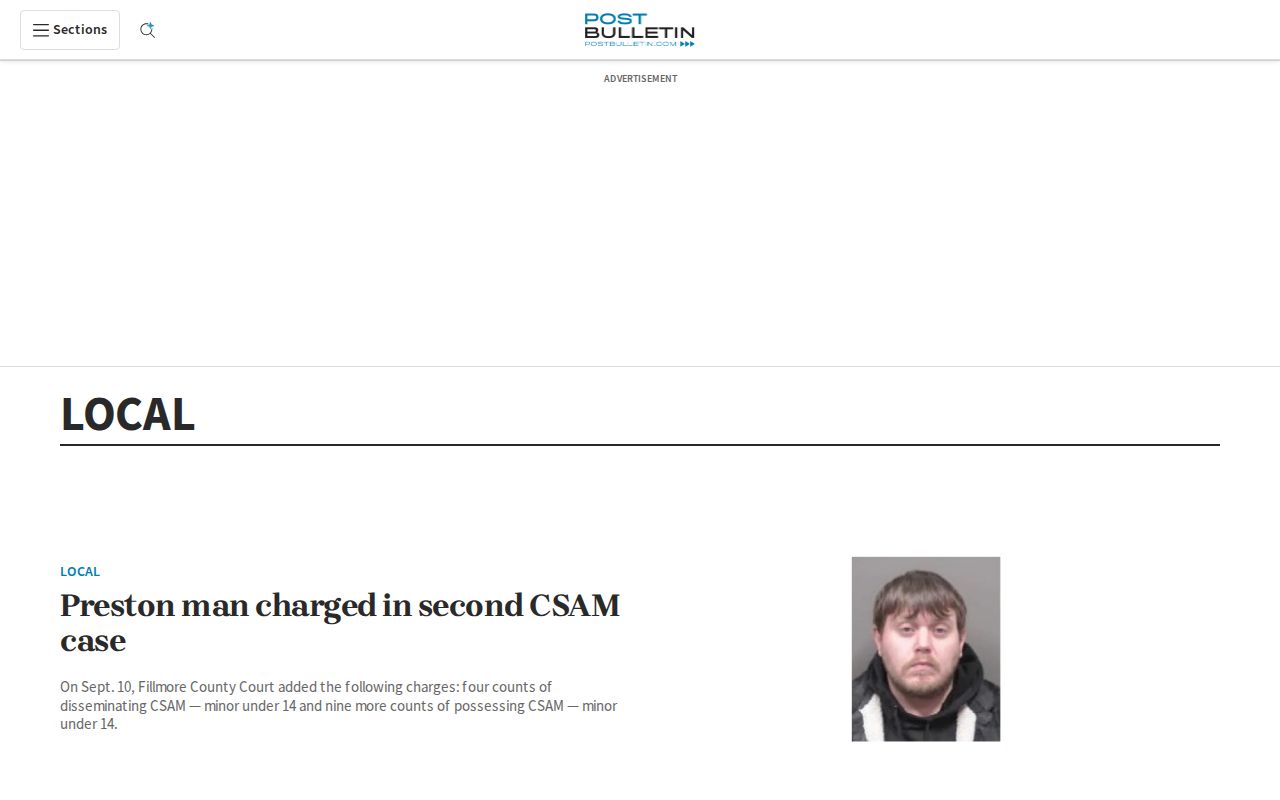
News gives context. It is not the official record of who was arrested in Olmsted County. Third-party booking sites rank even lower on that ladder. An Olmsted County page on Arrests.org sits empty or stale. Rival inventories skip the county entirely. Old booking photos linger there after the Sheriff and the courts have moved on. So weigh any claim against the records unit and the court file itself.
Verify Published Olmsted Arrest News
Publishing schedules follow editors, not the jail. One outlet runs an agency statement the same day; another waits for charging papers. Most bookings never get a story at all. Check dates closely. Compare the article's publication date against the incident date. Then check it against the booking date the Sheriff reported. A photo may carry an ADC or Sheriff credit. That tells you where the image came from, not that the piece counts as a full roster.
Fix errors at the source. Raise an inaccurate public record with the agency or the court. Then check the outlet's corrections process. A dismissal or amended charge rarely rewrites an old headline. For the legal outcome, the court's current disposition outranks the article.
Public Record Search
Sponsored Results